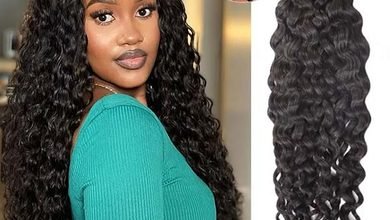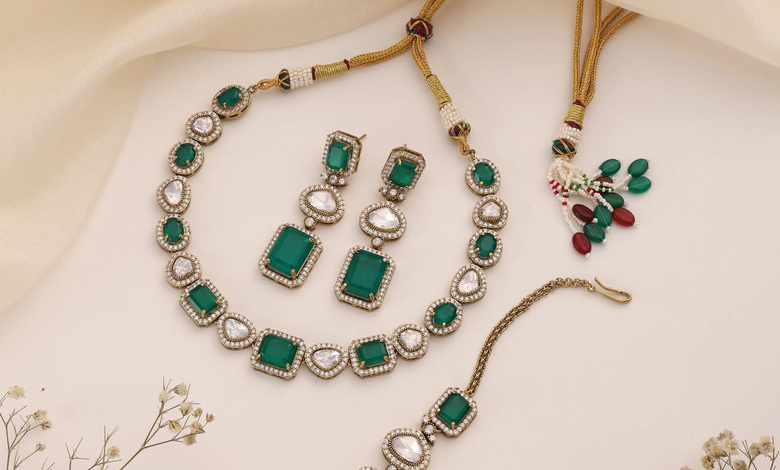
The setting of your hair gets planned weeks before you attend a wedding. There is the salon booking, the trial run, and a phone full of saved photos of potential styles. Earrings usually get picked on their own, often the night before, and the two choices rarely get looked at side by side. That gap often shows up later in the event photos, when a pair bought for its detail sits half hidden behind loose curls.
Your hairstyle decides how much of an earring people actually see. Indian traditional earrings such as jhumkas, chandbalis and long danglers are made to move and catch light near the face, so the hair around them matters almost as much as the design. One simple rule helps here. The more open your neck and ears are, the more detail your earrings can carry.
Choosing Indian Traditional Earrings for Updos and Buns
Pulled-back hair gives earrings the most room. A high bun clears the jawline completely, and that suits wide chandbalis or layered jhumkas with pearl drops. Brides who wear a full set with a Maang tikka and a necklace often choose this style for that reason, since the tikka, earrings, and necklace sit in one clear line with no hair crossing through them.
A low chignon works a little differently. The knot sits at the nape, close to where a long earring ends, so very long danglers can brush against the hair or catch on pins. Medium jhumkas usually sit better with this style. A guest at a reception might notice that a shoulder-length pair keeps tangling in the bun by the second hour, and a shorter pair would have avoided the problem from the start.
Earrings for Open Hair, Waves and Curls
Open hair covers part of the ear, so the detail near the lobe gets lost first. Studs and small jhumki tops often disappear under loose beach waves. Longer drops that fall below the hairline do better, because the lower half of the earring stays visible even when the top is covered. Tucking one side of your hair behind the ear is another simple fix, and plenty of women do this without much thought during a long evening.
Straight, sleek hair is perhaps the easiest open style to work with. It lies flat, so a chandbali or a slim pair of danglers shows through clearly. Curly volume is harder to plan around. Lighter earrings with an open frame tend to read better against curls than dense stonework, which can blend into the hair and lose its shape.
One more thing to consider at ceremonies: A dupatta draped over the head covers the hair and part of the ear, sometimes for an hour or more. Longer-drop earrings stay in view below the fabric edge, while ear-hugging styles are hidden for most of the ritual.
Matching Indian Traditional Earrings to Braids and Side-Swept Styles
Braids show up at mehndi and haldi functions more than almost anywhere else, and they change how Indian traditional earrings sit against the face. A few pairings tend to work well:
- A single side braid looks balanced with a longer earring on the open side, while the covered side can carry a smaller pair without anyone noticing the difference.
- A long braid with a gajra already adds flowers and white tones, so gold jhumkas with pearl detail match the look without competing.
- A side-swept style leaves one ear fully exposed, which makes it a good time to wear a bold chandbali.
- A loose fishtail or messy braid suits oxidized or colored pairs for daytime events.
See also: Ready to Transform Your Appearance With a Nose Surgery in Dubai?
Earring Weight and Long Hours with Pinned Hair
Hair pinned for six or seven hours puts pressure on the scalp and neck. Heavy earrings on top of that can make the evening tiring, even if the look feels right in the morning. Many shoppers now pick lighter versions of bridal designs, with the same Kundan or Polki look but less weight at the lobe. A sahara chain helps too, since it can tuck into the hairstyle and take some of the load off the piercing.
Planning Your Earrings and Hair as One Look
The easiest step is to bring your earrings to the hair trial. Wear them during the session and take a photo from the side, not only from the front. Side angles show whether the hair covers the design or frames it. If the stylist plans to add pins, flowers or extensions, ask where they will sit in relation to the earrings.
Earring collections today run from small jhumki tops to full bridal drops, in Kundan, Polki, gold-plated, and pearl styles, so you can choose a pair after the hairstyle is final rather than before. When your hair and Indian traditional earrings are planned together, the photos show both of them the way they were meant to be seen.