Low-voltage induction motors are essential components in manufacturing plants, commercial facilities, workshops, and infrastructure systems. They power a wide range of equipment, including conveyors, pumps, fans, mixers, and machine tools. Because motors often operate for thousands of hours over their service life, the choice of motor can influence energy costs, production reliability, and maintenance requirements.
A suitable selection process considers the electrical supply, load characteristics, installation conditions, efficiency, and available service support.
How an Induction Motor Works
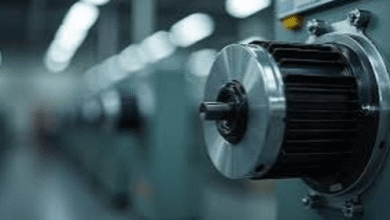
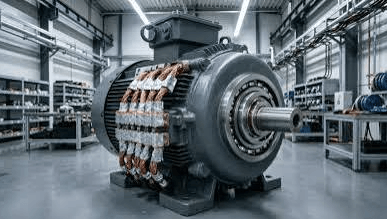
An induction motor uses an electromagnetic field to produce rotation. In a typical three-phase design, the stator creates a rotating magnetic field that induces current in the rotor, producing torque.
Induction motors are widely used because they have a practical design, can be reliable in industrial service, and are available in numerous power and frame configurations. Their performance nevertheless depends on correct sizing, installation, and operation within the manufacturer’s specified limits.
The term low voltage generally refers to motors designed for the relevant low-voltage electrical supply category under the applicable standards. Buyers should verify the exact rated voltage and frequency rather than assuming that every motor in this category supports the same supply.
Matching Motor Ratings to the Load
A motor must deliver the torque and power required by the driven equipment across its operating range.
Rated power
The required output should be determined from the equipment’s mechanical load and operating conditions. Excessive oversizing can increase purchase cost and may result in inefficient operation at light loads. Undersizing can lead to overheating, overload trips, or inadequate performance.
Speed and torque
The correct speed depends on the driven machine and any transmission system between the motor and the load. Pumps and fans have different torque characteristics from conveyors, crushers, or mixers. Engineers should consider both starting torque and the torque needed during normal operation.
Duty cycle
A motor used continuously under stable conditions may require a different specification from one that starts frequently or experiences variable loads. The duty cycle should be defined before selection so that thermal performance and service life can be assessed appropriately.
Efficiency and Energy Consumption
Electricity use can represent a substantial portion of the lifetime cost of an industrial motor. Efficiency should therefore be considered alongside the initial purchase price.
Compare realistic operating conditions
Nameplate efficiency is useful, but the actual load profile matters. A motor operating at a low percentage of its rated output may perform differently from one running close to its intended operating point.
Consider variable-speed control
Some applications benefit from variable-frequency drives, particularly where flow, pressure, or production speed changes over time. Speed control can reduce unnecessary energy consumption in suitable systems, but the drive and motor must be compatible and correctly configured.
Evaluate the complete system
Motor efficiency is only part of the picture. Poorly sized pumps, restrictive piping, misaligned couplings, or inefficient mechanical transmission can increase total energy use. A system-level assessment helps identify the most effective improvements.
Installation and Environmental Conditions
The installation environment should be considered before the motor is ordered. Dust, moisture, temperature, vibration, and exposure to chemicals can influence enclosure selection and cooling requirements.
See also: Important Techniques for Dog and Cat Health
Mounting and dimensions
Frame size, shaft dimensions, mounting arrangement, and terminal-box position should match the installation design. These details are particularly important when replacing an existing motor, as an electrically suitable unit may still require mechanical modifications.
Cooling and ventilation
Motors need adequate cooling to remain within their permitted temperature limits. Blocked ventilation passages, high ambient temperatures, and unsuitable installation clearances can contribute to overheating.
Protection rating
The enclosure’s ingress-protection rating should match the site conditions. Where hazardous atmospheres are present, a standard industrial motor may not be suitable; a specifically certified design may be required.
Maintenance for Reliable Operation
Preventive maintenance helps identify developing problems before they cause unplanned shutdowns. Maintenance requirements depend on the motor design, operating conditions, and manufacturer’s instructions.
Routine checks may include listening for unusual noise, monitoring vibration and temperature, inspecting ventilation, and examining electrical connections during appropriate maintenance intervals. Bearing condition and lubrication practices should be managed according to the equipment documentation.
Recording inspection results helps establish normal operating behaviour and makes it easier to identify changes. Vibration analysis or other condition-monitoring methods may be useful for critical equipment.
Supplier Documentation and Purchasing
Before requesting a quotation, buyers should prepare the motor’s rated power, voltage, frequency, speed, mounting dimensions, enclosure requirements, efficiency expectations, duty cycle, and operating environment.
Supporting documents may include technical datasheets, dimensional drawings, wiring diagrams, test records, installation guidance, and spare-parts information.
The product information for motorxc lv induction motor can be included in the supplier comparison process. Confirm available ratings, frame sizes, delivery terms, and applicable technical standards directly with the supplier.
Frequently Asked Questions
1. What equipment commonly uses low-voltage induction motors?
They are widely used in pumps, fans, conveyors, mixers, machine tools, and many other industrial systems, provided the motor meets the application’s requirements.
2. Is a higher-rated motor always better?
No. An oversized motor may cost more and may operate inefficiently under certain light-load conditions. Correct sizing requires analysis of the actual load and duty cycle.
3. What information is needed to replace an existing motor?
Important details include rated power, voltage, frequency, speed, frame size, shaft dimensions, mounting configuration, enclosure rating, and connection requirements.
Conclusion
Low-voltage induction motors provide a versatile solution for many industrial applications, but reliable operation depends on proper selection and installation. Matching power and torque to the load, considering efficiency, protecting the motor from environmental conditions, and maintaining the equipment systematically can improve long-term performance. Complete technical documentation helps buyers choose a motor that fits both the electrical system and the mechanical installation.