Temperature can have a significant influence on how products perform, age, and withstand everyday operating conditions. Electronic components may generate heat during use, plastics can change dimensions as they warm or cool, and mechanical assemblies may respond differently when exposed to seasonal temperature variations. For manufacturers, understanding these effects is essential to developing reliable products and maintaining consistent quality.
Temperature testing provides a controlled way to evaluate product behaviour under defined thermal conditions. It allows engineers to identify weaknesses, compare materials, and verify whether components meet their intended operating requirements. For laboratories and businesses working with smaller samples, compact testing equipment can offer a practical way to conduct these evaluations without requiring a large testing facility.
Why Temperature Testing Is Essential
Products rarely experience exactly the same temperature throughout their service life. During storage, transportation, and operation, they may encounter warm warehouses, cold outdoor conditions, heated equipment enclosures, or rapid changes between environments.
These variations can affect product performance in several ways. Materials may expand or contract, adhesives can respond differently to heat, and some electronic components may become less stable outside their intended operating range. Repeated temperature changes can also place stress on joints, coatings, seals, and connections.
Temperature testing helps engineers investigate these effects before a product reaches the market. By exposing samples to controlled conditions, teams can evaluate performance, identify possible failure mechanisms, and determine whether design changes are necessary.
The results can support product development, supplier evaluation, manufacturing quality checks, and formal qualification procedures. However, the test conditions must reflect the product’s intended use and relevant technical requirements.
Understanding Different Types of Temperature Tests
Temperature testing can involve several approaches, depending on the questions engineers need to answer.
Constant Temperature Testing
In a constant temperature test, a sample is maintained at a specified temperature for a defined period. This approach can help determine whether a product continues to function correctly under sustained hot or cold conditions.
It may also reveal changes in dimensions, material appearance, electrical characteristics, or mechanical performance. The appropriate temperature and exposure duration depend on the product specification and applicable test method.
Temperature Cycling
Temperature cycling exposes samples to a sequence of different temperatures. This approach is useful for investigating the effects of repeated expansion and contraction.
Potential concerns include cracking, weakened joints, changes in sealing performance, and damage to connections between materials with different thermal expansion characteristics. The cycle profile should be selected according to the product’s qualification requirements rather than chosen arbitrarily.
Thermal Stability Evaluation
Some tests focus on whether a material or component maintains its properties when exposed to a defined thermal environment. Depending on the application, engineers may measure dimensions, inspect surfaces, or perform functional checks before and after exposure.
These evaluations can help compare material formulations and determine whether a design is suitable for the intended operating range.
Selecting Equipment for Small Samples and Limited Spaces
Not every testing task requires a large environmental chamber. Research laboratories, electronics developers, educational institutions, and smaller manufacturers may work primarily with compact components, prototypes, or limited sample batches.
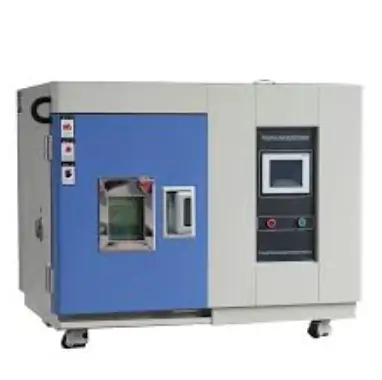
In these situations, selecting a LIB industry portable temperature test chamber involves considering portability alongside temperature range, internal capacity, control performance, and the intended test procedure.
A compact design can make installation easier and help organisations use laboratory space efficiently. Nevertheless, equipment should be chosen according to its technical suitability, not simply its physical size.
Important selection factors include:
- Operating temperature range: Confirm that the chamber supports the required minimum and maximum temperatures.
- Internal working volume: Ensure that samples fit without obstructing the required airflow.
- Temperature stability: Check how consistently the equipment maintains the selected temperature.
- Temperature uniformity: Consider whether conditions remain sufficiently consistent throughout the usable test area.
- Heating and cooling performance: Review the transition capabilities required by the intended test method.
- Control and monitoring: Determine whether the system provides suitable displays, sensors, alarms, and data recording.
- Portability and installation: Consider equipment weight, available workspace, electrical requirements, and ventilation.
- Maintenance and support: Evaluate calibration needs, service arrangements, and the availability of replacement parts.
A chamber may be compact but still have limitations in temperature range, sample capacity, or transition speed. Reviewing the complete specification helps prevent problems after installation.
Applications Across Different Industries
Electronic Components and Circuit Assemblies
Electronic components can respond differently to heat and cold. Temperature testing helps engineers assess whether circuits, sensors, connectors, and other assemblies continue to operate within their specified limits.
Testing may also reveal problems associated with solder joints, component mounting, or material expansion. Depending on the application, functional measurements before and after exposure can provide additional evidence of performance.
Plastics and Polymer Materials
Plastic materials may become more flexible, brittle, or dimensionally unstable under certain thermal conditions. Manufacturers can use temperature testing to compare material options and examine whether a selected polymer remains suitable for its intended application.
The results may inform decisions about housing design, wall thickness, material selection, and allowable operating temperatures.
Automotive and Transportation Components
Selected transportation components may experience cold starts, heated enclosures, or substantial seasonal temperature changes. Testing helps manufacturers assess whether materials and assemblies can withstand the conditions defined for their application.
The exact procedure depends on the component and relevant industry requirements. A basic temperature exposure should not be assumed to replace more demanding thermal cycling or environmental qualification tests.
Industrial Sensors and Control Equipment
Industrial sensors, controllers, and measuring devices may need to maintain accuracy across a specified temperature range. Testing can help verify whether performance remains within acceptable limits and identify conditions that require design improvements.
Where accuracy is important, measurements should be compared with established reference values rather than relying solely on visual inspection.
Preparing Samples for Reliable Testing
Careful preparation is essential for obtaining meaningful results. Before testing, technicians should identify each sample and record its initial condition. Where relevant, they may take photographs, measure dimensions, check electrical characteristics, or verify normal operation.
Samples should be placed inside the chamber according to the applicable procedure. Positioning matters because overcrowding can affect airflow and create uneven temperature conditions. The sample arrangement should also allow the required sensors to measure the environment accurately.
Before starting the test, operators should confirm the temperature settings, exposure duration, and any required transition sequence. If the procedure calls for multiple temperature stages, each stage should be documented and completed as specified.
After exposure, samples may need time to return to a defined condition before inspection or functional testing. This recovery period should follow the test method, because immediate measurements and measurements taken after stabilisation may produce different results.
Maintaining consistent preparation and handling procedures makes it easier to compare different samples and identify meaningful changes.
See also: Compounding Pharmacy Regulation in the United States: A Practical Explainer
Evaluating Results and Investigating Failures
Temperature testing is useful only when the results are assessed against clear criteria. These criteria may include dimensional tolerances, electrical limits, material appearance, mechanical strength, or continued functional operation.
A sample that shows a change after exposure should be investigated in context. The change may be temporary, reversible, or evidence of permanent damage. For example, a material may expand during heating and return to its original dimensions after cooling, while a cracked component may not recover.
When a failure occurs, engineers should examine the sample and determine the likely cause. Potential issues include incompatible materials, insufficient mechanical clearance, weak bonding, thermal stress, or components operating outside their intended range.
Corrective action might involve changing the material, adjusting the design, improving assembly methods, or modifying the product’s permitted operating conditions. The revised design should then be evaluated using an appropriate verification procedure.
Documented testing provides evidence that supports engineering decisions and helps prevent the same problems from recurring.
Maintaining Consistent Chamber Performance
Regular maintenance contributes to reliable temperature testing. Temperature sensors may require calibration, while heating and cooling systems, door seals, and other components need inspection according to the manufacturer’s instructions.
Operators should maintain records of calibration, servicing, and any unusual operating behaviour. If the chamber cannot maintain the selected temperature or displays unexpected fluctuations, the issue should be investigated before results are used for qualification decisions.
Good operating practices also include avoiding unnecessary door openings during a test, allowing sufficient recovery time after loading samples, and keeping the working area clean.
For organisations conducting formal product validation, traceable records of test conditions and equipment status help demonstrate that results were obtained using an appropriate process.
Frequently Asked Questions
1. What is a temperature test chamber used for?
A temperature test chamber creates a controlled thermal environment for evaluating products and materials. It can help determine whether samples maintain their required properties or functionality under specified hot or cold conditions.
2. When is a compact temperature chamber suitable?
It may be suitable when the samples are relatively small and the chamber’s temperature range, working volume, and control performance meet the test requirements. The intended procedure should guide the selection.
3. Is constant temperature testing enough to verify durability?
Not always. Constant temperature testing evaluates performance under sustained conditions, while some products require temperature cycling or additional environmental tests. The appropriate combination depends on the product’s expected service conditions and qualification requirements.
Conclusion
Temperature testing helps manufacturers understand how products and materials respond to controlled thermal conditions. It supports design verification, material selection, failure investigation, and quality assurance across a wide range of industries.
Compact testing equipment can be a practical choice for smaller samples and laboratories with limited space, provided that its capabilities match the required test procedure. By selecting suitable equipment, preparing samples consistently, maintaining reliable chamber performance, and evaluating results against clear criteria, organisations can make better-informed decisions about product quality and durability.